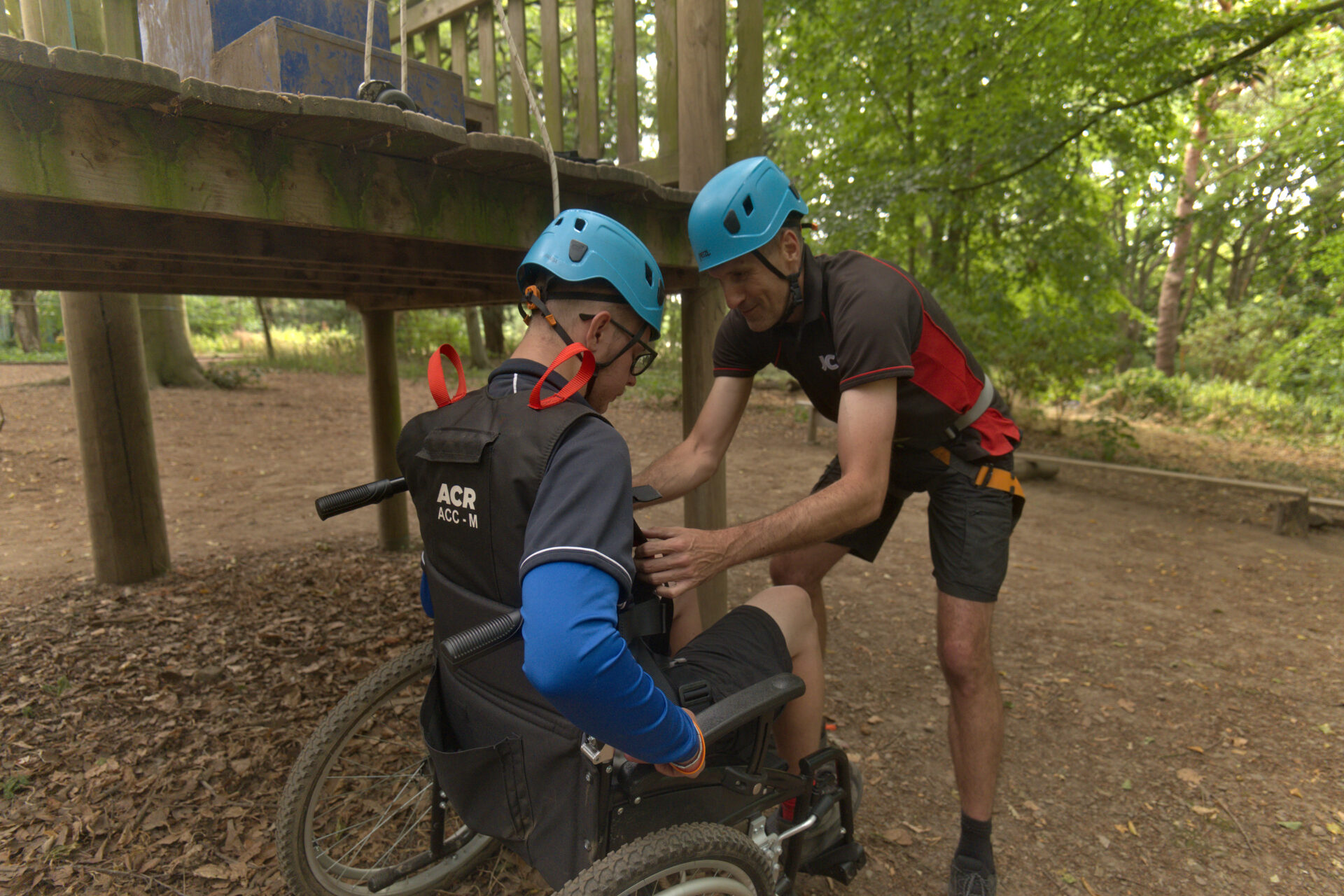
Planned around the individual
JCA supports children and young people with disabilities, medical needs, sensory needs, neurodiversity and other additional needs to take part in residential visits and activities, wherever reasonably practicable.
Every participant’s needs are reviewed before arrival. We agree the right adjustments with you and share them with our centre, activity and catering teams – so everyone arrives knowing the plan.


What we plan around
Accessibility at JCA is a planned process, not a one-size-fits-all promise. Every plan looks at five areas.
Activities
Adapted equipment, roles and instructions, with alternatives where needed.
Accommodation
Rooming and sleeping arrangements reviewed around each person’s needs.
Dining
Quieter spaces, flexible seating, staggered service and dietary needs.
Programme
Session timings, lengths and rest breaks adjusted where needed.
Emergency plans
Personal Emergency Egress Plans (PEEPs) where required.
How accessibility planning works
Five simple steps, from your first conversation to arrival day. We always recommend visiting the centre and speaking to our team before you book.
1
Tell us early
Share any needs at enquiry or booking stage, and before your activity programme is finalised.
2
Share the details
Our accessibility questionnaire covers medical, mobility, communication, sensory, learning and emergency needs.
3
We build the plan
We create an Individual Accessibility Plan for anyone who needs one, plus a PEEP where required.
4
We confirm what’s possible
Our centre team confirms the adjustments we can make, and is open about anything that isn’t suitable.
5
Everyone is briefed
Agreed adjustments are shared with instructors, accommodation and catering teams before you arrive.


Adapting activities
Activities are planned around aspiration, dignity, safety and realistic access. We review each activity using individual plans, risk assessments and activity accessibility checklists.
Adaptations can include:
- Adapted equipment and seated participation
- Simplified instructions, demonstrations and visual prompts
- Quieter waiting areas and additional rest breaks
- Ground-level roles and optional elements
- Specialist hoist processes for selected off-ground activities
If an activity isn’t suitable, we’ll let you know before your visit wherever possible.
Activity by activity
Some examples of how activities can be adapted. What’s possible always depends on the individual.
Team-building
Ground-level roles, puzzle-based tasks, alternative routes, reduced running or lifting and visual prompts.
Archery
An accessible shooting line, seated participation where required and adapted equipment.
Fencing
SwordSeat equipment supports participation for people with limited mobility.
Off-ground activities
Specialist hoist processes may be considered for vertical hoist, abseil, high ropes and zip wire.
Water activities
Adapted equipment, craft or alternative activities explored during pre-visit planning.
Sensory needs
Clear structure, demonstrations, visual timetables and low-stimulation alternatives.
Accommodation and dining
Accommodation
- Smaller, lower-occupancy rooms
- Low-stimulus room options, depending on location
- Rooms close to bathrooms or support adults
- Space for medical equipment
- Night-time welfare arrangements
Dining
- Allergen and dietary communication, with alternative meals
- Flexible seating and quieter dining areas
- Staggered service or adjusted mealtimes
- Alternative queueing arrangements
There is more flexibility for these options at quieter times of the year.


A programme that works for everyone
Wherever possible, participants follow the same activity programme as the rest of their group, with adaptations built in. Where welfare, access or sensory needs require it, we can adjust:
- Session timings and length
- Transition time between activities
- Rest breaks and start times
- Evening activity timings
- Group sizes, at certain times of the year
- Alternative activities or sessions
What’s included
Reasonable adjustments are discussed as part of planning. Specialist support or equipment, such as bed hoists or mobility aids, is likely to be an additional cost.
Included in planning
- A pre-visit needs discussion
- An Individual Accessibility Plan where required
- A PEEP where required
- An activity adaptation review
- Communication with centre, activity and catering teams
Where available
- Quiet or low-stimulus spaces
- Staggered meals and flexible seating
- Alternative activities and visual prompts
- Simplified schedules and extra rest breaks
- Rooming considerations
Not included or guaranteed
- One-to-one or personal care
- Medical care beyond normal first aid
- Specialist transport
- Access to every activity
- Specialist equipment not held by the centre, unless agreed in advance
Planning a trip for a SEND group?
For SEND schools and groups, we’ll start with an early planning conversation and can create a group accessibility plan alongside individual plans.
- Quieter times of year, when facilities, timetables and dining can be adjusted
- Sensory breaks and quieter spaces
- Site-specific access information
- Opportunities to help shape your programme
We always recommend visiting the centre first, so you have a full picture of what’s possible.


Frequently asked questions
Will every participant get the same programme?
Not always. We aim for inclusive participation wherever reasonably practicable, but some participants may need shorter sessions, extra breaks, adapted roles, alternative activities or different timings.
Will an Individual Accessibility Plan be created?
Yes, where someone needs specific adjustments or emergency planning. The plan records their needs, agreed adaptations, which activities can be adapted, any that can’t be accessed safely, support strategies and staff briefing requirements.
Can meals be quieter or less stimulating?
Where available, we can plan quieter dining areas, staggered service, alternative queueing or quieter times. These are agreed before arrival and built into the individual or group plan.
Can activity timings be changed?
Yes, where reasonably practicable. Timings, session length, rest breaks, evening sessions and alternative activities can be adjusted for welfare, medical, sensory or access reasons.
Can off-ground activities be adapted?
Potentially. JCA has developed hoist guidance, with technical-advisor input, for selected off-ground activities. Participation depends on individual suitability.
When should we tell you about additional needs?
As early as possible – ideally at enquiry or booking stage, and no later than when your activity programme is being finalised.
Talk to us before you book
Need to talk through accessibility or additional support needs? Speak to the JCA team before you book. Call 01273 647 200 or make an enquiry and we’ll arrange a call with the centre team.